
Amman and Zaatari Camp – June 2018
CONTENT WARNING: domestic violence
Monday.
When I arrived to Zaatari on Monday morning, some of the refugee staff at our youth center told me Hashem* had beaten his wife so badly that she’d called the police who’d detained him in the nearby Mafraq prison for one night. Given that so many women in Zaatari get beaten on so many nights, I knew right away it must have been a Very Bad Situation for Hashem’s wife – both he and his wife being Syrian refugees – to take the uncommon step of contacting the police.
I knew it must have been a Very Bad Situation for her to overcome the usual barrier of fear that prevents domestic violence survivors from involving police. This barrier, in her case, was complicated further by her status as a refugee.
Refugees are tolerated in Jordan, are somehow accepted, for now. The “for now” hangs over them, a constant heaviness. Some of their numbers have been deported – sent back to Syria by Jordanian authorities. Those who remain know that they might not have permanent access to the land they live on, which is a built-to-be-temporary refugee camp.
Yet Hashem’s wife had broken through what must have been multiple barriers of fear, to contact the Jordanian police who manage the camp, who arrested her husband and held him overnight. All this occurred to me in a moment, while I carefully kept my face neutral.
Of course, this news – this highly sensitive and secret piece of news – traveled around the center in about the length of time it takes to smoke one cigarette. People drifted towards the tiny kitchen to weigh in. Amani, a stout Syrian woman in her forties who worked in the art room, said, “Oh please, fii imra’a ma tindarab – is there any woman who doesn’t get beaten? How could she do that to him – speak out and get him in trouble with the police?”
Kamal, one of the soccer coaches, chimed in, “I don’t understand how these women think. Once she complains and gets him into trouble, how are they ever going to recover from that? He will just beat her again and again. Now they can never go back to a normal environment at home.”
Then he looked at me and jerked his head over his shoulder. I followed him out of the kitchen. Pulling me out of earshot of the others, he said, “Please don’t fire Hashem over this. He’s my friend; he’s a good guy. He puts in good work here.” Kamal knew that Hashem’s being reported to the police for abusing his wife could jeopardize his position as staff at the youth center. He was putting in an early word with me, advocating for his friend to stay on the team, before my other colleagues arrived in the second car driving up from Amman.
Obviously I did not want to discuss this with Kamal. I avoided a direct answer. “I’m not going to discuss this with you, but I’ll let Sayf know about this when he gets here.” I stomped back towards the kitchen in search of more Turkish coffee, with my green boots clicking loudly on the tiles.
Tuesday.
Tuesday morning, back in the stuffy heat of Amman. I drove one of the staff cars across the city to Khelda, a neighborhood at the northwest edge of Amman where the big UNHCR headquarters building is, to attend a meeting with other UN agencies and NGOs. The Protection Working Group: one path in the labyrinth that is the UN coordination system.
There, we sat around a giant oval table in the cool air conditioning, and discussed the likelihood of Syrian refugees in Jordan being forced to return to Syria. The UN staff said the Jaber border crossing – the main crossing between Jordan and Syria – might reopen in October after being closed for three years. The reopening of the border could lead to some refugees returning to Syria. They said refugees might be prosecuted, arrested or disappeared by the Assad regime when they return. They said “might”, but all of us around the table knew that some certainly would.[1]
They said that Syrians living in Rukban camp up near the Jordan-Syria border might be bussed north to Idlib, one of Syria’s still-active conflict zones, because the government of Jordan wanted to close down the camp.
They said, “We need to figure out how to get Syrians Syrian passports again, once their passports expire.”
They said arrests and deportations of refugees in Jordan would likely resume, business as usual, now that the Jordanian government’s “regularization of status” campaign was over.[2]
I took notes, tucking all this away in a corner of my mind, and joked around with Will and Hannah, my friends who were also at the meeting on behalf of their own NGOs.
I drove from Khelda back to my office across the city in Weibdeh, a neighborhood close to downtown. I drove a bit carelessly, playing old Sara Bareilles songs with the volume way up to drown out my thoughts, and I stopped at Starbucks for a coffee and a pound of breakfast blend. I drove too fast, almost carelessly, down the Wadi Saqra valley.
Thursday.
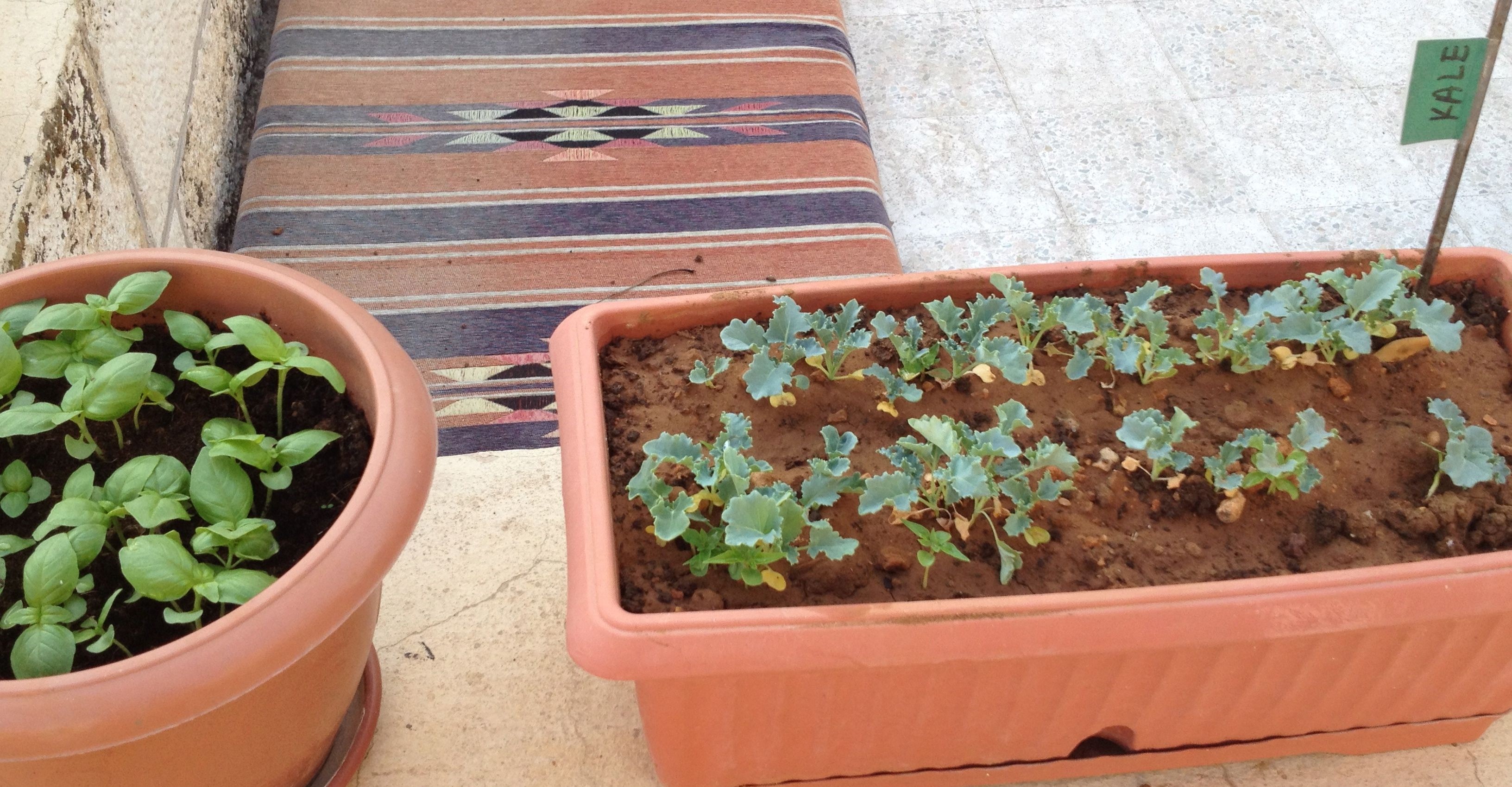
I took the day off work and sat out in the sun for a little while. I took my (then-boyfriend, now-husband) Raja’s little seedlings from their perch on the living room bookshelf out onto the balcony with me to get some sun. Parsley, broccoli, peppers, carrots. Radishes and cucumbers. I guess they were too little to stand the hot sun, because when I brought them back in a half hour later, they were all lying down feebly on the soil. I was so worried they would die after Raja had been growing them carefully from seed and looking after them every day for weeks. Standing barefoot in the living room of my apartment, hands on hips, looking down at the wilted seedlings, I cried and cried.
*All names changed to protect privacy.
[1] The Assad regime treats Syrians who have been outside the country for part of the conflict, which has been going on since 2011, with suspicion. Why did you leave? The regime assumes anti-regime sentiment among those who left, so those who spent time outside Syria have been known to face torture or disappearance when they return to Syria. (This has been well documented over the years. One report I recommend on the topic is this Human Rights Watch report from October 2021.) If they are not arrested upon returning to Syria, men are almost certain to be conscripted into the Syrian army, which is in constant need of more fighters as the war drags on, and Syria still has a mandatory draft for men ages 18-42. Conscription or arrest are top reasons that Syrians (especially men) do not return to Syria, but stay as refugees in Jordan or Turkey or Lebanon or wherever they ended up when they fled, no matter how bad the conditions there, and no matter how much they would like to return home.
[2] The government of Jordan launched a campaign in 2015 inviting refugees with irregular statuses, such as those who had moved without notifying the authorities and did not have an accurate name and address on file with them, to come forward to a police station and re-register themselves. The government announced that those with irregular statuses would not be punished for not being registered properly, but would have their statuses regularized and be given ID documents. This was a limited-time offer; if refugees with irregular statuses did not come forward to register themselves before the campaign expired, they could face “forced relocation” by the Jordanian government to a refugee camp in Jordan, or deportation to Syria.


 Curious Georgie
Leave a comment