
This is part 2 in my day in the life series. Read part 1 here: Day In The Life 1: The Zoo.
As expected, we get attacked with questions when we pull into the youth center. When is Aqaba happening? Did any names get refused? We do these trainings once or twice a year; our people know the drill and are hungry for details.
I hide from the questions in the tiny, 10-square-foot trailer that serves as our staff office and make final changes to the Powerpoint with Katie.
Then I walk over to the trainings room and convene a meeting with 20 of the Syrian staff to brief them on the research study findings. I give a two-minute introduction to the meeting, which I feel in the moment is bad quality and full of Arabic mistakes because I’m rushing and unfocused, then let Katie, Dania and Aisha take over and lead the rest of the meeting.
I walk/run back towards the staff office, realizing on the way that I need to submit the monthly and quarterly reports today, neither of which is ready. And that we should have some sort of way to thank Katie, since today is her last day with us in the camp.
I change course to find Yusuf and ask him to prepare a small gift from the center’s art room to thank Katie for volunteering with us over the past months.
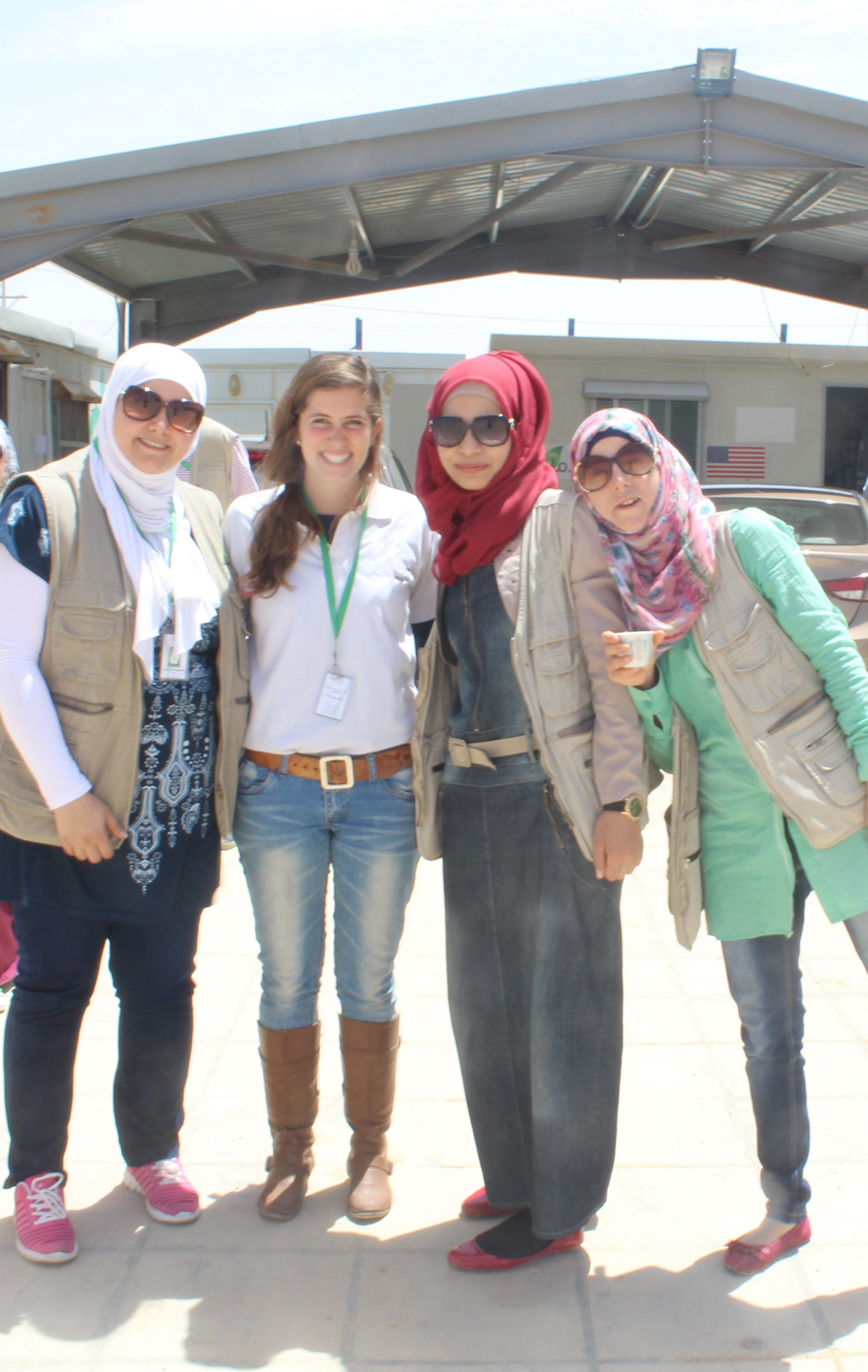
Back in the small office, I open my laptop and begin to review the monthly report. After ten seconds of reviewing, I realize that it’s already time to drive over to base camp in order to make it on time for the working group. So I stuff my laptop back into my backpack and walk/run across the courtyard towards one of the two staff cars, fishing for the keys in the pocket of my cargo vest. I’ll grab the girls from their meeting when driving out of the center.
On my way to the car, Abu Fayez[1] pulls me aside saying, “I urgently need to talk to you.”
“Can it wait till I come back from base camp?”
“Just take this piece of paper, you’ll understand after you read it, and we’ll talk later.”
He hands me a piece of paper, which I quickly skim. It reads, in English:
Hello everyone!
How are you??
I’m Zain Ahmad Abu Mohammad
I’m a Syrian refugee in Al Zattari Camp.
I have been here in the camp for about 6 year
I live with my family. I’m married and I
have 2 daughters and one son. We are
five members. I live in a miserable life and
I’m very poor. What I want from you
to help me to resettle in Canada. I suffer
from the bad weather in winter and summer
I want to teach my children in Canada
because I want my child to be well-educated
I look back up, lock eyes with him. “Thank you Abu Fayez. For sharing this with me. Can we talk about this later?” I fold it into the pocket of my vest. It’s 11:52. Keep moving, keep moving.
Jump into the car, grab the girls, bounce down the road towards base camp.[2]
12:00 pm. We stomp through the hot and dusty wasteland of base camp. Not too many people around.
Base camp has such a depressing atmosphere. It’s terrible. Trailers that serve as meeting rooms clustered in two long lines on a downward slope of the caked, beige earth. At the bottom of the slope, Imdad, a lone café that sells Turkish coffee and mediocre sandwiches to stressed out aid workers.
We are first to arrive to the working group in one of the trailers-as-meeting-rooms. We sit for a few minutes under the fluorescent lights.
When the others arrive, we discuss refugee returns to Syria and forced relocations to Azraq camp,[3] another Syrian refugee camp in Jordan. There is a long debate about the numbers of how many refugees have been moved to Azraq because each of us has heard a different figure.
We talk about the rumors and anxiety spiking in the whole community. And how Sharia judges were recently on strike for more money. And how there have been cases of fathers taking their daughters from the camp back into Syria for honor killings. And rumors of large families, wishing to return to Syria, bringing with them daughters-in-law who do not want to go back.
Sara from UNHCR says, “We need to make sure all returns are actually voluntary.” She says, “We’re not getting the data from the government on these forced relocations to Azraq. We wouldn’t know anything at all, except that we have staff posted 24/7 in Raba Sarhan to track what’s going on.”
I nod along, taking notes and pretending to myself this is a normal meeting like other people in other jobs also have.
My mind skitters around, drifts up, up, over the trailers, from Raba Sarhan to Azraq camp back to the youth center and over the ocean to my parents’ sunny kitchen table in Milwaukee what time is it there now? to what is my boyfriend doing now shall I call him when I get out of this meeting to need more coffee should probably stop at Imdad to—
“Georgie, Katie? Over to you.” It’s time for our presentation.
Coming next week: Day In The Life 3.
[1] It’s common to call people Abu [their oldest son’s name]. Abu, father: Abu Fayez, the father of Fayez.
[2] What is base camp? In case you missed it (from a previous post): “The feel of the camp for me went hand in hand with the feeling of standing slightly apart from all those around me. A guest – but an honored one. I held power as a white person and as NGO staff. The most obvious example of this is that I had access to base camp: a fenced-in area inside Zaatari, which refugees are not allowed to enter, where meetings take place among UN and NGO staff. Driving up to the gate in my NGO’s Ford Escape and flashing my staff badge to the guard gained me access to this camp-within-a-camp, this strangest of strange worlds.”
[3] Azraq camp is the other of the two Syrian refugee camps in Jordan. The forced relocations are explained pretty well in this report: “There were reports of forced relocations to Azraq refugee camp, including many to Azraq’s restricted Village 5, as an alternative to deportation for offenses by Syrian refugees; such offenses encompassed “irregular status” (expired registration documents or working without a work permit); criminal activities; and potential security risks, without the latter being clearly defined. As of September, Azraq camp hosted more than 39,900 individuals, including more than 10,000 adults and children in the fenced-off Village 5 area. In 2018 NGOs estimated that the government forcibly relocated more than 7,200 refugees to Azraq camp, including more than 4,000 to Village 5 for security reasons. The vast majority of these refugees were not informed of the reasons for their detention and did not receive legal assistance.”


 Curious Georgie
Leave a comment