
A spring morning in 2018
I woke up sleepy and thought I would ask my friend John if we could just do half of our usual morning running loop. (I always think, when I wake up for a run and am still 75% asleep, that I could never make it for the full run I’d planned on – but I always do once I get moving.)
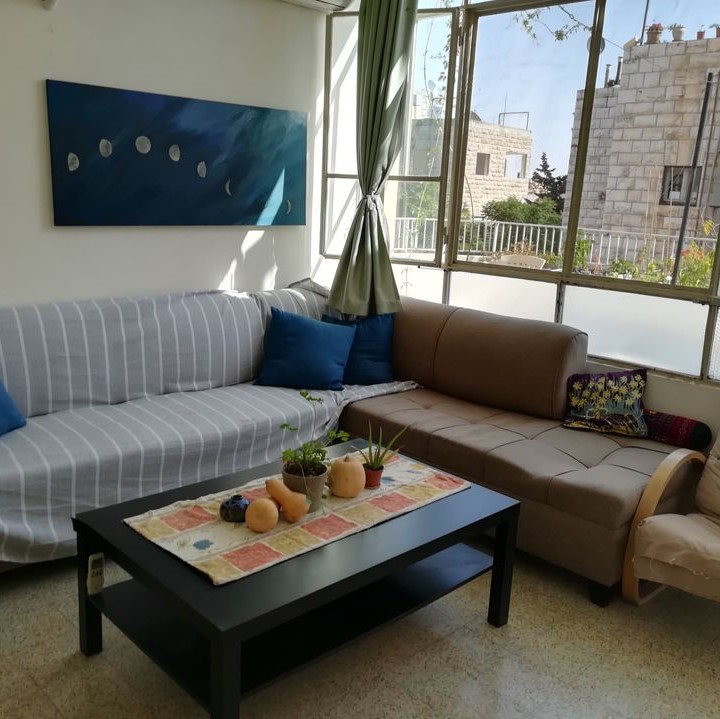
I walked out of my room in a fog of sleep and noticed that the green curtains in the living room of my Amman apartment had an orange tint behind them. I pulled them back. The sun had just risen, fiery orange and perfectly framed between the two buildings beyond my balcony.
I turned around and admired on the opposite wall the orange glow which had been blocked by the curtains I’d moved aside.
Over the weekend Assad’s regime had killed hundreds of people in Eastern Ghouta with chemical weapons. I hadn’t been paying attention to the news so I’d heard about it from Brian in the UNHCR meeting the day before.
My first thought was, “How embarrassing, I don’t even know what big things have been happening in Syria.” Knowing what was happening in the Syrian war was part of my job, since I worked with an NGO in Zaatari, a Syrian refugee camp.
I hadn’t been doing a very good job of that – following the war news closely. I was three years into my work in the camp, two years into being burned out from my work in the camp, a few months into realizing I urgently needed to quit this job, and still nine months away from actually quitting it.
I’d started to avoid the news when I wasn’t spending a work day in the camp, which is how this devastating turn of events caught me by surprise.
At the UN meeting we discussed the fears and rumors that something similar might, God forbid, happen in the south of Syria (where most Zaatari residents were from, since Zaatari, in the north of Jordan, is very close to southern Syria). Eastern Ghouta is a bit further north, near Damascus. I imagined how many azzas, or funerals-from-afar, there would be in Zaatari if that happened.
I wondered what the mood would be like in the camp when my colleagues and I next drove up there – it was about an hour’s drive north of Amman.
I shivered in the cool air of the living room. All was quiet outside.
I thought of that line from Mary Oliver: “It is a serious thing / just to be alive / on this fresh morning / in the broken world.”
I thought of lyrics from a Tallest Man On Earth song I love: “Into the shivering cold of day, when the house is gone but the street remains.” (Recently I wrote about my obsession with the Tallest Man On Earth.)
Our living room smelled like dirt, I noticed then, because Raja (then boyfriend, now husband!) and I had moved all the potted seedlings inside, displacing the books from the bookshelf, so that the young plants’ leaves wouldn’t get nibbled by the birds.
It was a funny sight, our bookshelf full of potted plants, and books stacked all around the room and on the coffee table. I’d heard the repair man chuckle to himself yesterday when he’d come to fix our water filter.
Of course I enjoyed running with John when, a few minutes later, we met at Paris circle in the early morning light and began our familiar route. We ran it a few mornings a week with a small group of friends, but that morning, just the two of us could make it.
I didn’t even feel too tired or out of shape as we ran through dusty streets, avoiding the crumbling sidewalks and attracting the occasional honk from a passing yellow taxi. And I felt grateful for the friendship I had with John. It felt deeper than two years’ worth.
Was this because we were living abroad? Was it because we understood and approached living in Jordan in much the same way?
Was it because I’d lost some closeness with many of my friends from my former life – in Boston – that I felt this way?
We talked about our families. I guess he’d never known my mom was sick (with multiple sclerosis). That struck me as odd; I really thought he did, but I guess I’d never told him.
I spent much of our 5k route explaining why I still felt I needed to process (thereby processing) my family’s visit to Jordan a few weeks prior. We’d had an incredible time during their visit. My parents, sister, and brother really enjoyed seeing all the Jordan sites, and Raja and I had so much fun showing them around.
But because I’m a worrier, I worried about my mom. Because of her MS, she’d sometimes needed walking poles to walk long distances.
I also felt determined to give them the best time – perhaps to prove something to the people who were not too thrilled when I announced I was moving to Jordan three years prior, to take a random humanitarian job with a random NGO?
After our run, as I was walking back from Paris circle, then climbing the stairs to my beloved apartment and shivering from the cold and drizzle, I realized there were other emotions still lingering in my system from their trip.
I kept wanting to make sure Raja was comfortable with my family and they were comfortable with him and everyone was getting along. (Leave it to me to over-stress. They got along so wonderfully, and still do all these years later!) The visit was a whirlwind, and with all these emotions and worries still flying around, I remembered I needed to be kind to myself.
Back in my living room, I flopped on the couch and opened my laptop to play Wachet Auf, my favorite classical piano piece. I scrolled through YouTube to find the right version.
I always enjoyed these early mornings, before Raja or my roommate was awake, watching the sunlight fill the room. I listened to the aching melody and tried to hold everything I was holding.
I thought: How can there be Eastern Ghouta just 130 miles away, and here in my living room, Joseph Kingma is playing Wachet Auf, the most beautiful version I’ve ever heard, with the counter melody shining through, children keep dying, and I am free to sip my coffee?


 Curious Georgie
Leave a comment